





















The world of bees
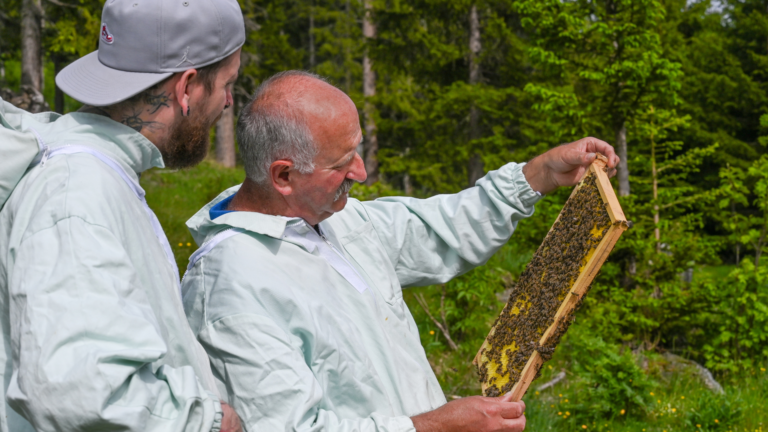
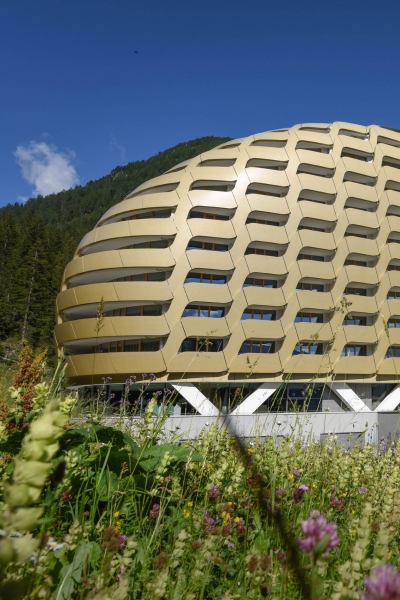
When the World Economic Forum meets in Davos in winter, helicopters land just a few meters from the hotel at a pop-up airport right on the lake. In summer, however, there is a completely different kind of air traffic around AlpenGold: thousands of bees fly to the hives of several bee colonies, which Heinrich Heusser and his wife Jeanette manage with great passion and experience.
The Heusser family’s bees produce over a ton of Davos mountain honey every year. While this sounds impressive, it quickly becomes relative: during its short life of only four to six weeks, a single bee flies around 800 kilometers – and contributes just enough honey to fill a teaspoon.
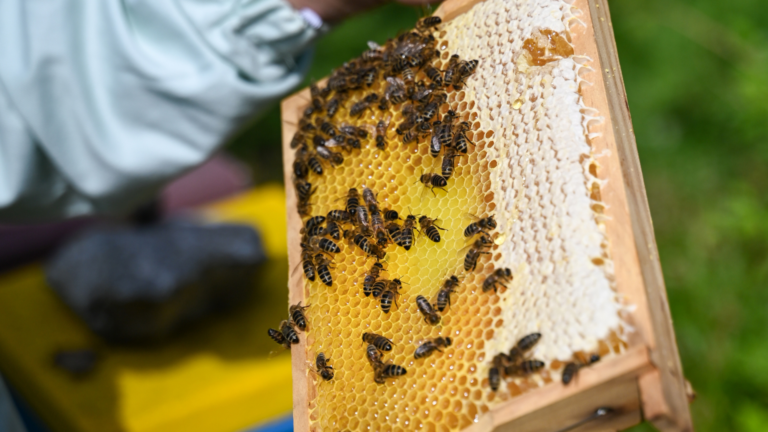
Unlike wild bees, honey bees live in a strictly organized social structure. Depending on the season, a colony can number between 10,000 and 40,000 individuals. Since honey bees hibernate as a community, they have to stock up on supplies: they store honey and pollen in their intricately constructed honeycombs.
The world of bees is a fascinating microcosm. A bee colony is a matriarchy: it is almost exclusively supported by worker bees. They collect nectar, pollen, propolis, and water, thereby ensuring the survival of the colony. Before they fly out as foragers, they spend the first days of their lives as hive bees. During this time, they care for the brood, build honeycombs, produce wax, and keep the hive clean.
In addition to the worker bees, there are 1,000 to 2,000 drones in the summer. Their sole task is to mate with young queens—for this purpose, they are strongly built and have particularly large eyes. At the center is the queen: she lays up to 2,000 eggs per day, a total of around 200,000 per year, and controls many processes in the colony with her pheromones. Without targeted queen breeding, sustainable beekeeping would not be possible.
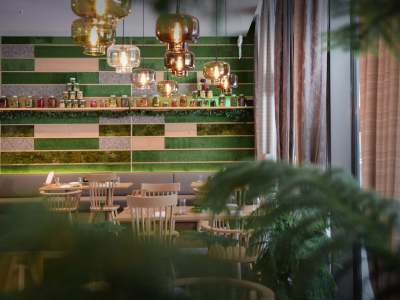
It is impressive to observe how a bee colony develops over the seasons, survives the winter, and how much work is required behind the scenes to produce a single jar of honey. Heinrich Heusser is not only a beekeeper, but also a bee inspector for the Davos/Prättigau area, a beekeeping consultant, and was the bee commissioner for Graubünden and Glarus for 12 years. With his wealth of experience, he provides fascinating insights into the life of bees – the perfect partner for our executive chef Manuel Zünd to develop new ideas and creations for the atelier VERT and to teach our guests about the importance of bees.
Because honey is only part of the story. Bees are crucial for something much bigger: our global food supply. About one-third of all food depends directly or indirectly on pollination by insects. This makes it all the more important to protect the habitats of bees – for nature, for us humans, and for future generations.